
Building Production-Grade AI Agents in Golang using Agent Development Kit (ADK)
- gocloudwithus
- Jan 23
- 2 min read

Modern systems are no longer just APIs and databases. They increasingly need reasoning layers - systems that can decide what to do, not just how to do it.
Agent Development Kit (ADK) for Go provides this reasoning layer in a structured, production-safe way.

1. From LLM Calls to Agents
Traditional LLM Integration (Fragile)

Problems:
No memory
No tools
No observability
No safety
Hard to scale
ADK-Based Agent System

Key idea:
The LLM is one component, not the system.
2. What an Agent Actually Does
An agent follows a reason–act–observe loop.

This loop is explicit in ADK, not hidden in prompts.
3. Core ADK Components

Each component has one responsibility.
4. Model Layer (LLM Abstraction)
ADK isolates the LLM behind a clean interface.

Why this matters
Easy provider swap
Easier testing
Centralized retries, timeouts, cost control
5. Tools: How Agents Act on Systems
Agents never touch infrastructure directly. They use tools.

Mental Model
Agent | Tool |
Decides | Executes |
Reasons | Acts |
Stateless | Deterministic |
6. Memory: State Over Time
Memory makes agents context-aware.

Examples
FinTech: User risk profile
HealthTech: Patient history
Platforms: Workflow state
7. Policies: Guardrails for Regulated Systems
Policies are non-negotiable in FinTech and HealthTech.

Examples
No financial advice
No medical diagnosis
No PII leakage
Policies run before and after agent execution.
8. Execution Modes
Reactive Mode (Fast Decisions)

Used for:
Queries
Explanations
Simple actions
Planner Mode (Workflows)

Used for:
Multi-step business workflows
Automation pipelines
Platform orchestration
9. Runner: Safe Execution Engine
The Runner wraps agents with operational guarantees.

This keeps the agent pure and testable.
Industry-Specific Architectures
FinTech: Compliance-Aware Advisory Agent

Key constraints
No direct investment advice
Explain-only outputs
Full traceability
HealthTech: Genetic / Lab Report Interpreter

Key constraints
No diagnosis
Evidence-backed suggestions
Long-term memory
Platform Engineering: AI Decision Layer

Agents act as decision engines, not controllers.
End-to-End Production Architecture
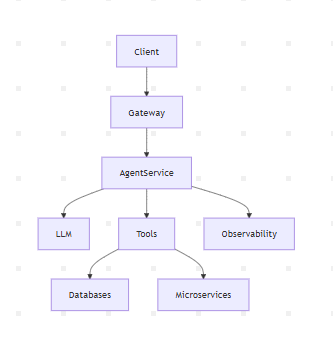
ADK for Go is not a chatbot framework.
It is:
A decision runtime
A control plane for AI
A safe abstraction for regulated industries
Looking to build AI-native systems in Golang? Reach out to GoCloudStudio.


Comments